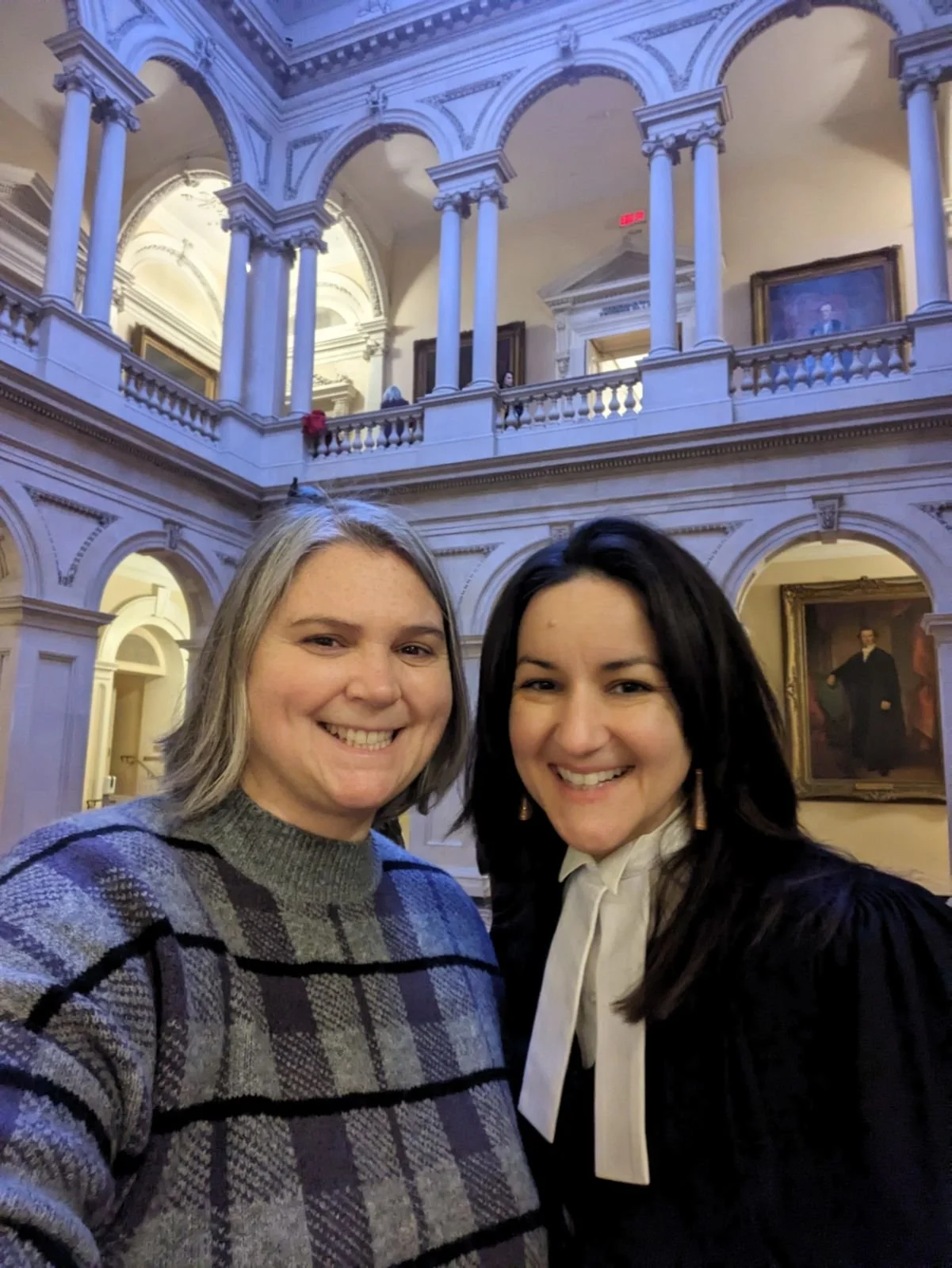
Jessica Rose and I had the honour of representing the Canadian Association of Elizabeth Fry Societies (CAEFS) in R. v. Cope—my first time appearing before the Supreme Court of Canada.
CAEFS intervened because the Crown’s reading of sentencing provisions intended to protect Indigenous women and girls, risks over-criminalizing them instead. These provisions were perceived to conflict with Gladue principles, when the ongoing crises of mass incarceration and gendered violence faced by Indigenous women and girls, have a common root cause: settler colonialism.
I argued that the Court should reject the false choice between protecting Indigenous women or reducing over-incarceration of Indigenous men. Harm in communities is cyclical, not neatly divided by gender. Incarceration does not heal—it perpetuates colonial harm, breaking ties to community, land, and responsibility.
Given that Gladue and Ipeelee show how sentencing can account for systemic oppression and community impact, there is no need for the Court to do anything but remind judges of the tools they already have. But this is not just a legal issue—it is a political one, demanding that Canada reckon with the harms it has caused Indigenous peoples while working toward real community preservation.
It was a privilege to stand for CAEFS and push for a justice system that protects Indigenous women without perpetuating colonial cycles of harm.